
Every cycle left a shallow film of water sitting in the bottom basin no matter what we tried. A piece of broken glass had jammed the drain pump, cleared it and it drains completely clean now.
Griselda O.
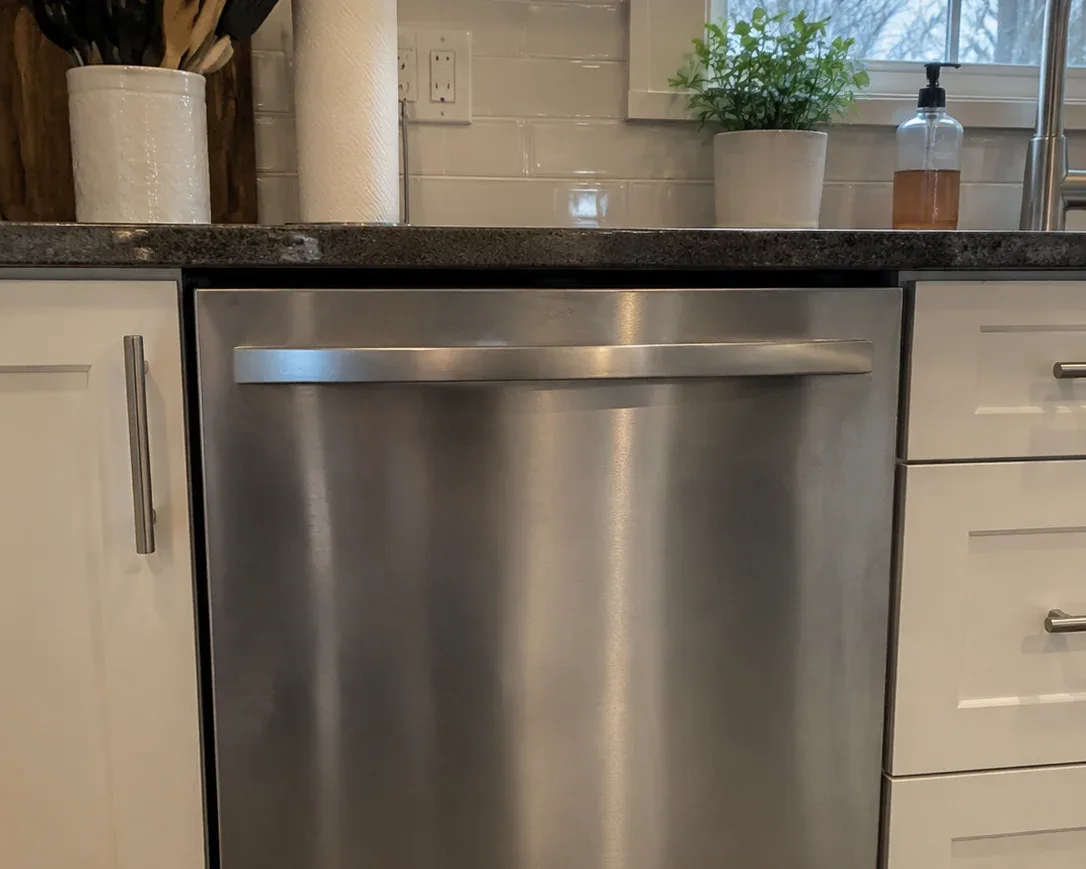
A dishwasher leaving everything cloudy, pooling water at the bottom, or refusing to latch shut rarely means it's time to replace it, just one part worth finding.
Select what's happening below for a plain explanation of the likely cause.
Water Pooling At The Bottom
Open the door after a finished cycle and there's a shallow puddle sitting in the basin, sometimes just a film and sometimes enough to notice right away. A blocked drain pump is the usual culprit, small debris like a fragment of glass or a stray label gets pulled in and jams the impeller. A pinched drain hose produces the identical symptom for a much simpler fix. We check the pump first since it's the more common and cheaper of the two.
Glasses Coming Out Filmy
A gritty haze coats everything after a cycle, even with new detergent and a rinse aid topped off. Clogged spray arm nozzles are the frequent cause, the tiny holes get partially blocked and water pressure at the dishes drops too low to rinse cleanly. A neglected filter underneath compounds the same problem. We clear both before ever suggesting it's a water hardness issue needing a separate fix.
Nothing Happens At The Panel
Press start and there's genuinely nothing, no lights, no chime, no response whatsoever from the control panel. One of the most frequent reasons is a door that isn't registering as fully shut, given that most models refuse to start unless the sensor confirms it's properly closed. We check the latch alignment closely before ever assuming the control board has failed.
Harsh Grinding Mid-Cycle
A rough grinding noise starts partway through the wash, loud enough to hear clearly from the next room over. Usually a small object, a sliver of glass or a stray piece of cutlery, has worked its way into the chopper mechanism beside the pump rather than the motor actually breaking down. We clear the obstruction and run a test cycle before ever recommending a larger repair.
Water Seeping Around The Door
Some water finds its way onto the floor during the wash despite the door looking properly shut. Age causes the rubber gasket to compress and stiffen, and once that happens it can no longer press evenly enough to form a full seal against the tub. We check its full perimeter rather than just the visible section, since a partial gasket swap rarely resolves the whole problem for good.
Everything Clean But Still Damp
Dishes come out spotless but noticeably wet, even with the heated dry option switched on for the cycle. A failing heat element or a stalled vent fan is the frequent explanation, occasionally it's simply a rinse aid reservoir that isn't dispensing during the final rinse stage. We test each part in order to pin down exactly which one's actually at fault.
Still Not Sure What's Wrong?
Skip the guesswork, one visit is usually enough to sort it out for good.
Real parts, real training on each of these, not a generic fix-it-all approach.










Codes vary by brand, but these patterns show up across most major dishwasher manufacturers.
| Code | What It Usually Points To |
|---|---|
| E1 | The water inlet valve isn't filling properly, check for blockage or debris. |
| E4 | Water supply pressure reaching the unit is too low to complete the cycle. |
| FtD / F9E1 | The dishwasher failed to fully drain from the previous cycle. |
| E15 | The anti-flood sensor detected water in the base pan, sign of an internal leak. |
| LE | The wash motor or circulation pump isn't operating as expected. |
| PF | A power interruption was detected mid-cycle, usually clears after a reset. |
Exact codes differ between manufacturers, so treat this as a general guide, not a replacement for your model's manual. If a code keeps returning after a power reset, book a visit and we'll read it properly.
A handful of dishwasher complaints trace back to something quick you can verify yourself, safely and without any tools.
Clean the bottom filter. Most models have a removable filter under the lower rack. A clogged one is the top reason behind cloudy dishes and standing water.
Check the drain hose for kinks. Look under the sink where the drain hose connects and confirm it isn't bent sharply or pinched anywhere.
Make sure nothing blocks the spray arms. Tall pots or pans can stop the arms from spinning freely. Give them a light spin by hand to confirm they move.
Confirm the door latches fully. Most dishwashers won't run at all unless the door reads as completely closed. Check nothing's obstructing it.
Run the hot water tap first. Running the kitchen sink until the water turns hot before starting a cycle helps the dishwasher heat up faster.
Check the breaker or power cord. Confirm the outlet or breaker feeding the dishwasher hasn't tripped, especially after a storm or power flicker.
Still acting up after trying these? Something deeper is probably going on. Get a technician out and we'll take it from there.
What customers said after we sorted out their dishwasher.
Send us your details and we'll reach out to lock in a time.
Thank You!
Your message has been sent successfully. We'll get back to you shortly.
Thank You!
Your message has been sent successfully. We'll get back to you shortly.
Prefer to talk it through? (214) 305-2364